It started with a keyword costing us a fortune in our Google Ads campaigns at Mehrklicks. On paper, the term was perfect: high search volume, strong commercial intent, and directly related to one of our core services. But it was a dud. While click-through rates were decent, conversions were abysmal, and the cost-per-click was draining our budget with little to show for it.
My first instinct, like many operators, was to kill it. The data said it was a losing bet. But before pausing the campaign, I looked closer. The numbers told a more nuanced story than simple failure. Users were interested enough to click the ad, but the landing page—a service page designed to convert—was clearly not what they were looking for. They weren’t ready to buy; they were still trying to understand. This disconnect is common; research shows that nearly 60% of B2B buyers would rather do their own research online than talk to a salesperson, especially in the early stages. Our ad was interrupting their learning process instead of facilitating it.
This realization fundamentally shifted how we viewed our paid search data. It wasn’t just a performance report; it was a live map of market curiosity.
The Ad-to-Article Framework
The problem was a classic system mismatch. Our paid system was optimized for immediate action, but the user was in a learning mindset. So, we decided to build a bridge between the two. We called it the „Ad-to-Article“ feedback loop.
The logic was simple:
-
Identify High-Intent, Low-Conversion Keywords: We ran a filter in our Ads account to find keywords with high costs and click-through rates but low conversion rates. These were our „expensive questions“—topics the market was actively searching for but for which a direct sales pitch was premature.
-
Translate Intent into an Educational Topic: We treated that expensive keyword not as a conversion opportunity, but as the headline for an in-depth article. The user’s search query became our content brief. What specific problem were they trying to solve? What context were they missing?
-
Build the Definitive Resource: Instead of a sales page, we built a comprehensive educational resource. The goal was to create the best possible answer to the user’s question, filled with diagrams, examples, and clear explanations. This is a core part of our strategy for building scalable systems, where each piece of content serves a specific function.
-
Redirect the Traffic: We created a new, smaller ad group targeting that specific keyword and pointed it directly to the new educational article. We weren’t asking for a sale anymore. We were offering an answer.
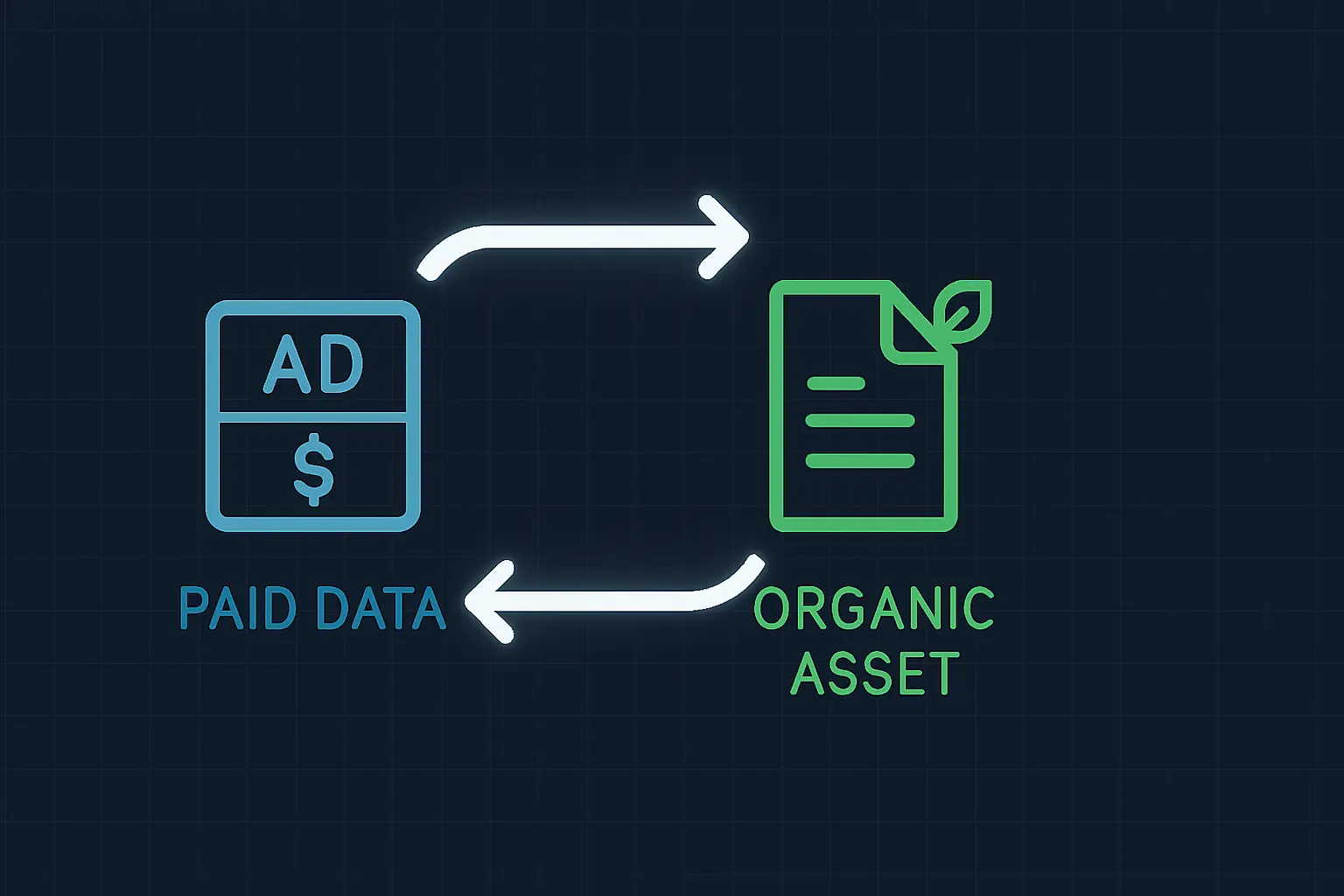
Here’s a simplified view of how this data flow works, turning paid insights into an organic asset:
[Image of a flowchart showing: Google Ad Keyword (High Cost, Low Conversion) -> User Intent Analysis -> Create Educational Article -> New Ad points to Article -> Organic Ranking + Retargeting Audience]
Observation: From Cost Center to Asset Generator
The results were immediate and fascinating. The ad performance for that keyword transformed. The cost-per-click dropped, and engagement metrics like time on page skyrocketed. We were no longer fighting the user’s intent; we were aligning with it.
But the real magic happened over the next few months. Because the article was so thorough and directly answered a commercially valuable question, it started ranking organically. Search engines recognized it as a valuable resource. The keyword we once paid a premium for with every click was now generating „free“ traffic through our organic growth strategy.
We had inadvertently used our ad budget as a research and development fund for our SEO strategy. The paid channel acted as the canary in the coal mine, identifying valuable topics with proven demand far faster than traditional keyword research ever could. We weren’t guessing what people wanted to learn; we had receipts. The power of this integrated approach is no secret; studies confirm that campaigns orchestrated across multiple channels can be over 30% more effective than siloed efforts.
Insight: Your Paid Channels Are a Real-Time Research Lab
This experiment offered one significant insight: paid and organic channels shouldn’t be managed in isolation. When they communicate, they create a self-sustaining loop where each system makes the other smarter and more efficient.
The paid system excels at speed and testing. It can get immediate feedback from the market on messaging, topics, and user intent. The organic system excels at building long-term, compounding value. It turns the validated insights from the paid system into permanent assets that generate traffic and authority over time.
By connecting them, we stopped seeing ad spend as a simple cost of acquisition. It became an investment in market intelligence that directly fueled our most valuable, long-lasting content assets. The expensive keyword wasn’t a failure; it was just sending us a message. We just needed to build the right system to listen.
Frequently Asked Questions (FAQ)
Q1: What is the main difference between paid and organic marketing?
A: Paid marketing involves paying for ad placements to get your content in front of an audience, like Google Ads or social media ads. It provides immediate visibility. Organic marketing, on the other hand, focuses on earning traffic through non-paid methods, primarily SEO (Search Engine Optimization), by creating valuable content that ranks naturally in search results over time.
Q2: Why is it important for paid and organic teams to work together?
A: When siloed, these two functions often work against each other or miss key opportunities. An integrated approach allows them to share data and insights. Paid search data can reveal high-intent keywords to target with organic content, while strong organic content can improve the Quality Score of ads, lowering costs. This synergy creates a more efficient and effective marketing system overall.
Q3: How can a small business start integrating its paid and organic efforts?
A: Start simple. Look at your best-performing paid search ads. What questions or problems do they address? Create a detailed blog post or guide on your website that answers that question even more thoroughly. Then, point a new ad directly to that content piece. You’re using a proven ad concept to build a long-term organic asset.
Q4: Doesn’t sending ad traffic to a blog post waste money?
A: It’s a shift in perspective from immediate conversion to long-term value. While it may not lead to a sale on the first click, you are attracting a highly qualified user who is actively researching. By providing the best answer, you build trust and establish your brand as an authority. You can then use retargeting to nurture that user toward a conversion, often at a much lower cost than trying to convert them cold.
Q5: What is a „data feedback loop“ in this context?
A: A data feedback loop is a process where the outputs of one system become the inputs for another. In this case, the performance data from paid ad campaigns (clicks, conversions, cost) is used as an input to inform the organic content strategy (what articles to write). The success of that new organic content (rankings, traffic) can then inform future ad campaigns, creating a continuous cycle of improvement.