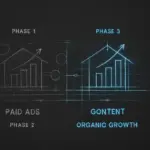
When building digital assets, the focus is often on the foundation—the evergreen content that defines a domain. But I’ve learned that a foundation alone, no matter how robust, is static. True growth requires a dynamic layer on top, one that signals life, relevance, and continuous activity.
For our solar energy platform, PvKnowHow, this dynamic layer became a dedicated Solar News section. The experiment was born from a simple observation: our core knowledge base was authoritative but quiet. It lacked a pulse. The news system was our attempt to give it one.
This series of short updates shares what we learned by adding that pulse. It’s a look into how a disciplined rhythm of small, consistent updates created a relevance loop that transformed the system’s performance—driving exponential organic growth without a single dollar spent on promotion.
1. When Freshness Became Our Strongest Ranking Signal
The day our server logs showed Google’s crawl frequency had tripled wasn’t after a major site redesign or a complex backlink campaign. It happened three weeks after we began publishing one short, structured solar news update per day. That was the moment I realized we had fundamentally changed how algorithms perceived our domain.
Observation: From a Static Library to a Living Resource
Initially, PvKnowHow was an evergreen digital knowledge base. We invested heavily in foundational articles—deep, comprehensive guides on solar technology, policy, and economics. They were accurate and valuable, but they were also static. They were endpoints, not entry points. Search engine crawlers would visit periodically, confirm nothing had changed, and leave. Our authority was locked in place.
The hypothesis for the news section was simple: what if we added a layer of high-frequency, low-effort content? By publishing daily updates, we weren’t just adding pages; we were signaling to search engines that PvKnowHow was an active, current authority. Research consistently shows that for topics where new information is critical, like technology and market news, search engines heavily weigh „Query Deserves Freshness“ (QDF) signals. Our daily posts were a direct answer to that algorithmic need. We were telling the system, „We are monitoring this topic. Right now.“
Framework: Engineering the Freshness Signal
Our approach wasn’t about chasing breaking headlines but creating a consistent rhythm of relevance. We weren’t trying to be a major news outlet; we were demonstrating our ongoing expertise.
The system was designed for efficiency:
- Structured Data: Each news post followed a strict template, making it easy for crawlers to parse.
- Internal Linking: Every news update linked back to a relevant evergreen article, effectively warming up our static content with fresh relevance signals.
- Consistent Cadence: We published at the same time every weekday. This predictability trained both users and algorithms to check back regularly.
This framework transformed our static content into a living ecosystem. The news became a dynamic entry point, constantly pulling fresh attention toward our foundational assets. While we were building a knowledge base of lasting value, the news layer ensured it was always seen as current.
Insight: Authority is Dynamic, Not Static
Our core assumption had been that authority was built through big, definitive pieces of content. The news experiment proved that authority must also be maintained through continuous, relevant activity. Static expertise, no matter how deep, eventually becomes a historical record. The consistent, fresh signals are what tell the world—and the algorithms that index it—that your knowledge is not just accurate, but alive. For many topics, freshness isn’t a bonus feature; it’s the primary indicator of relevance.
2. Designing a Publishing Cadence That Scales
The first goal for the PvKnowHow news section wasn’t to write viral articles or break major stories. It was a purely operational test: could our small team publish one structured, 300-word update every day for thirty days without the system breaking down? The content was secondary to the rhythm. We were building a machine, and the articles were its output.
Observation: Consistency Over Intensity
In digital content, it’s easy to fall for the „heroic effort“ trap—spending weeks on a massive guide, publishing it, and then going silent for a month. This creates spikes of activity followed by troughs of inactivity, an unreliable signal for users and search engines alike.
We wanted the opposite: a low-amplitude, high-frequency wave of content. A predictable pulse. The challenge is that consistency is deceptively difficult. It requires a system that removes friction, decision-making, and the need for daily creative breakthroughs. We weren’t trying to create masterpieces; we were building a habit at the domain level. This shift in mindset was crucial. Success wasn’t measured by a single article’s performance but by our ability to stick to the schedule.
Framework: The Editorial Machine
To achieve this, we designed a process more like a factory assembly line than an artist’s studio. Our editorial rhythm was built on three pillars:
- Strict Scoping: Every news piece had a defined format: one core idea, a brief analysis of 250-350 words, a link to an official source, and a link back to our own evergreen content. This eliminated scope creep and made each task predictable.
- Systematized Sourcing: We didn’t wait for inspiration. We monitored a curated set of industry press releases, research reports, and policy updates. Our task was to summarize and provide context, not generate novel ideas from scratch.
- Tool-Agnostic Workflow: The process ran on a simple project board with clear stages: Sourced, Drafted, Reviewed, and Scheduled. Its simplicity ensured the system could run with minimal overhead.
This machine was our foundation for scaling content production. By defining the „what“ and „how“ so rigidly, we freed up the mental energy to simply execute. The cadence became manageable because the task was always the same size.
Insight: The System is the Product
The true product of this experiment wasn’t the collection of news articles but the publishing system itself. A reliable rhythm does more than produce content; it builds trust. Search engines learn to trust that you are a consistent source. Readers learn to trust your reliability. The team learns to trust the process. Occasional, high-intensity content is good for creating assets, but a predictable, scalable cadence is what builds a living, authoritative platform. The rhythm is its own signal.
3. The Day Google Started Checking Our Site Every Day
About a month into our daily publishing cadence, I checked our server logs and noticed a distinct change. Googlebot’s visits, once sporadic, had settled into a predictable daily pattern. It was as if the crawler had added our site to its morning rounds, checking in for the latest update. The system wasn’t just reacting to our content; it was anticipating it.
Observation: Creating a Relevance Loop
The news section’s most significant impact wasn’t on the articles themselves but on the entire PvKnowHow domain. We witnessed a „halo effect“ as the activity of the news layer began to lift the performance of our static, evergreen content.
Here’s what we saw in the data:
- Increased Crawl Rate: As noted, Google began crawling the entire site more frequently, not just the news section. This meant our updates to older evergreen articles were indexed faster.
- Keyword Expansion: We started ranking for hundreds of new, time-sensitive long-tail keywords (e.g., „solar panel tariff update [month year]“). These terms had almost no competition and served as new gateways into our ecosystem.
- Impression Growth on Core Content: Our foundational articles, whose impression growth had plateaued, started to climb again.
This wasn’t an accident. We had engineered a relevance loop. A user would land on a timely news article about a new solar subsidy and, within that article, find a link to our comprehensive guide on „how solar subsidies work.“ This user journey signaled to Google that our site offered both timeliness and depth.
Framework: The Symbiotic Relationship Between Dynamic and Static Content
The system was designed to make our static and dynamic content work together. We viewed the relationship as symbiotic:
- News as the Hook: The news articles were the entry point, capturing top-of-funnel attention with fresh information. They answered the question, „What’s happening now?“
- Evergreen as the Anchor: The knowledge base was the destination, providing deep, foundational context. It answered the question, „How does this all work?“
- Internal Links as the Bridge: Every news post acted as a bridge, channeling authority and traffic from fresh content directly to our most important evergreen assets.
This process of measuring digital asset performance showed us that the value wasn’t in either content type alone but in their interaction. The news layer constantly discovered new pockets of user intent, which in turn illuminated the value of our foundational guides.
Insight: A Rising Tide Lifts All Boats
A dynamic content layer doesn’t just perform on its own; it acts as an engine for the entire domain. By creating a constant stream of fresh signals, you’re not just telling search engines that a few new pages are relevant—you’re making the case that the entire website is a living authority on the topic. The frequent pings of relevance from the news section served as a constant reminder to Google that our foundational content was part of an active, trustworthy resource, lifting the entire domain’s visibility.
4. Why Topical Trust Is Built, Not Bought
We spent zero dollars promoting the PvKnowHow news section. No social ads, no sponsored content, no outreach. Yet, within six months, it was generating more new organic entry points than core evergreen pages that had taken weeks to write. This wasn’t a marketing success; it was a trust-building success. We had built an asset that algorithms and users learned to rely on, day after day.
Observation: Demonstrating, Not Just Claiming, Expertise
In the SEO world, „authority“ is often treated as a commodity acquired through backlinks or technical optimization. While those elements matter, our experiment showed that true topical trust is the result of consistent, reliable behavior. Search engines like Google are increasingly focused on rewarding E-E-A-T (Experience, Expertise, Authoritativeness, and Trustworthiness). A daily news cadence is a powerful way to demonstrate all four.
- Experience & Expertise: By commenting on daily industry events, we showed we were active participants in the solar space.
- Authoritativeness & Trustworthiness: By publishing reliably every single day, we proved we were a dependable source of information.
Anyone can write one great article. Showing up every day, week after week, sends a far more powerful signal. It says, „We are committed to this topic.“ That consistency is something you cannot buy.
Framework: Authority as a Function of Reliability
We treated the news section as a product with a service-level agreement to our audience and to search engines. The promise was simple: a credible, concise update on the solar industry every weekday. The value wasn’t in any single post but in the accumulated trust earned by fulfilling that promise over time.
This aligns with viewing your website as a long-term digital asset. Like any asset, its value compounds. Each daily post was a small deposit into our „trust fund.“ One deposit is negligible, but compounded over months, it builds significant equity. We focused on the long-term value of our digital assets, and our daily publishing rhythm was the mechanism for compounding it.
Insight: Trust is the Output of a Disciplined System
Ultimately, we learned that topical trust isn’t a goal to target directly; it’s the emergent property of a well-designed, disciplined system. We didn’t set out to „build trust.“ We set out to build a reliable publishing machine. By focusing on the mechanics of the system—cadence, format, workflow—trust became the natural output.
You can’t purchase long-term authority with an ad budget. It’s earned through the slow, steady, and often unglamorous work of showing up consistently. Our news system was proof that the most powerful signal of trustworthiness is simply being trustworthy.
Frequently Asked Questions (FAQ)
What is „topical authority“?
Topical authority is when a website is recognized by search engines as a definitive and trustworthy source for a specific niche. It’s not about one page ranking for one keyword, but about the entire domain being seen as an expert. This is built by creating a deep and interconnected web of high-quality content that covers a subject comprehensively.
Why does content „freshness“ matter for SEO?
Content freshness signals to search engines that your information is current and relevant. For topics with frequent developments (like technology, news, or finance), search engines prioritize up-to-date content to provide a better user experience. A steady stream of new content, such as a news section, signals that your entire site is actively maintained.
How often should I publish new content?
There’s no magic number—the key is consistency. A predictable rhythm, whether daily, three times a week, or weekly, is more effective than publishing five articles in one week and then going silent for a month. The best cadence is one you can sustain over the long term without sacrificing quality. Our experiment used a daily cadence to maximize the freshness signal, but the principle of rhythm is what matters most.
Do I need to write long articles every time?
Absolutely not. Our news posts were intentionally short and focused (250-350 words). Their goal was different from our long-form, evergreen guides. The news was designed for timeliness and consistency, while the guides were for depth. A healthy content ecosystem has a mix of content types, each serving a different purpose.
How does a news section help an existing blog or website?
A news section acts as a dynamic layer that:
- Increases Crawl Frequency: It encourages search engines to visit your site more often.
- Captures Timely Keywords: It allows you to rank for new, emerging search terms.
- Builds Topical Trust: It demonstrates your ongoing commitment and expertise in your field.
- Re-engages Your Audience: It gives readers a reason to come back regularly.
- Strengthens Core Content: It provides fresh opportunities to link back to your core evergreen content, boosting its visibility.
Next Steps: From Observation to Application
The principles we uncovered with the PvKnowHow news system aren’t limited to the solar industry. They’re about the mechanics of building digital relevance in any field.
The next step is to reflect on your own digital assets.
- Where is your content static?
- What would a low-effort, high-frequency „pulse“ look like for your domain?
- Could you design a system to produce a small, valuable update on a consistent schedule?
Building a dynamic relevance layer is less about content creation and more about system design. It starts not with a big idea for an article, but with a commitment to a sustainable rhythm.