PvKnowHow began as a video portal with a single, comprehensive course on solar energy. Our goal was simple: to transfer practical knowledge from our engineering work at [JvG Technology] into a clear, accessible format. The videos were dense with information, structured linearly, and designed for someone committed to learning the subject from A to Z. It worked, but it wasn’t a system. It was a broadcast.
The Observation: Broadcasts Create Dead Ends
Soon after launching, we noticed a pattern in the feedback. Viewers would ask highly specific follow-up questions: “You mentioned monocrystalline panels in Minute 12, can you explain the difference from polycrystalline?” or “What exactly is the function of a bypass diode?”
Our video format was a monologue, unable to efficiently answer these granular questions. To find an answer, a user would have to scrub through a 30-minute video. This was a frustrating user experience and, more importantly, a dead end for curiosity. A video can tell you what, but it struggles to provide an immediate, accessible why or how for every branching thought a learner has.
We realized that for every minute of video content, there were at least a dozen potential questions and sub-topics that deserved their own space. Our single video course wasn’t a knowledge base; it was the table of contents for one. The real opportunity was to build out the chapters.
The Framework: From Monologue to Hub-and-Spoke
The challenge was to connect the depth of the video lessons with the accessibility of written text without creating a disorganized content mess. We decided to redesign our architecture around a simple hub-and-spoke model.
- The Hub: Each core video lesson (e.g., „How Solar Inverters Work“) would serve as a central, high-level educational asset. It provided the complete overview and narrative flow.
- The Spokes: For every key concept mentioned in the video, we created a dedicated written article. These were short, focused pieces that answered one specific question. For the inverter video, this meant creating spoke articles like:
- What is a String Inverter?
- How do Microinverters differ?
- Understanding MPPT in Solar Inverters.
This structure transformed our content from a linear path into a dynamic network. A user could watch the main video for context, then dive into the specific articles that matched their curiosity. Critically, it also gave search engines something to work with. While Google is getting better at understanding video, its core strength remains indexing text. By translating video concepts into crawlable, written articles, we were building on-ramps for organic traffic directly to the answers people were searching for. We were no longer just broadcasting; we were building a library.
The Insight: Anticipate the Next Question
This shift taught me a foundational principle of building knowledge systems: a scalable content architecture doesn’t just present information; it anticipates and guides the user’s next question. A single piece of content should be a starting point, not an endpoint. By structuring our knowledge in a hub-and-spoke model, we created a system that encourages exploration and provides clear paths for deeper learning, turning passive viewers into engaged learners. This is a core idea we explore in our work on [building systems that scale]—the architecture dictates the flow.
Designing the Knowledge Map: How We Structured PvKnowHow for Scalability
When PvKnowHow was just a handful of videos, a simple list was enough: „Video 1: Introduction,“ „Video 2: Solar Panels.“ But as we planned our expansion into written content, I knew this approach would quickly lead to chaos. A flat list of articles is easy to start but impossible to scale. It becomes a digital junk drawer where valuable information gets lost.
The Observation: Content Piles Don’t Scale
Looking at other educational sites, we saw a common problem. Many had hundreds of articles, but they were organized chronologically or by loose tags. There was no clear hierarchy. A user landing on an advanced article had no easy way to find the foundational content they needed first. It was a collection of posts, not a cohesive knowledge base.
We realized that without a deliberate structure, we would be building a content pile, not a content system. Every new article would add to the clutter rather than strengthening the whole. This is a trap many businesses fall into—they focus on the velocity of publishing without first designing the library that will house the books. For a system to scale, its organizational logic must be established from the beginning.
The Framework: A Taxonomy as a Strategic Blueprint
Instead of just writing, we paused and spent a few weeks designing the first version of our content taxonomy. This wasn’t just about creating categories; it was about mapping the entire domain of solar knowledge as we saw it. We broke it down hierarchically:
-
Top-Level Categories (The Core Pillars): These were the main disciplines within solar technology.
- Photovoltaic Fundamentals
- Solar Components
- System Planning & Installation
- Economics & Policy
-
Sub-Categories (Thematic Clusters): Within each pillar, we created logical groupings. Under „Solar Components,“ we listed:
- Solar Panels
- Inverters
- Mounting Systems
- Batteries & Storage
-
Individual Topics (The Articles): Finally, within each sub-category, we mapped out the specific questions and concepts that would become individual articles. Under „Solar Panels,“ this included topics like:
- Monocrystalline vs. Polycrystalline
- Panel Efficiency Explained
- Anatomy of a Solar Cell
This taxonomy became our strategic blueprint and served two critical purposes. First, it created a clear, logical navigation path for users. Second, and more importantly, it showed us the gaps. The map visually represented not only what we had created, but everything we needed to create to build a comprehensive resource. It turned our content strategy from a reactive, idea-based process into a systematic, gap-filling exercise.
The Insight: Structure Is Strategy
This process revealed a core principle: a well-designed taxonomy is more than just organization; it’s a strategic asset. It defines the boundaries of your expertise and provides a clear roadmap for content creation. It ensures that every piece of content you produce has a logical home and contributes to building topical authority—a key factor for both user trust and search engine visibility. Before you write a single word, map the territory.
From Tutorial Sequence to SEO Hierarchy: Translating Learning Flow into Search Intent
Our original PvKnowHow video course was designed as a linear curriculum. It followed a logical sequence: start with the basics of sunlight, move to solar cells, then panels, then inverters, and so on. This A-to-Z path is perfect for a dedicated student who has enrolled in a course and is committed to learning from the ground up.
The Observation: Organic Traffic Doesn’t Follow a Syllabus
Once we started publishing written articles, we quickly learned that organic traffic from search engines behaves completely differently. Nobody arrives at the „front door“ of the curriculum. People don’t search for „Solar Energy Course Chapter 1.“ They search for their immediate, specific problem.
Their entry point is a question:
- „how much do solar panels cost in Germany?“
- „what is the best inverter for a small home?“
- „are solar panels worth it in winter?“
The linear learning path that made sense for our course was misaligned with the non-linear, query-driven nature of organic search. Our content was structured like a book, but people were arriving as if they had opened it to a random page. We had to build a system that could serve both the structured learner and the spontaneous searcher.
The Framework: Deconstructing the Monolith
Our solution was to deconstruct our monolithic course content into modular, query-focused articles. We went through our video transcripts and mapped each key concept to the types of questions a person would type into Google.
- The segment on panel types became a standalone article titled „Monocrystalline vs. Polycrystalline Solar Panels: Which is Better?“
- The discussion on system costs became a detailed guide optimized for „Solar Panel System Cost Calculator.“
- The explanation of inverters was broken out into its own piece answering the query „What Does a Solar Inverter Do?“
This process transformed our content architecture. We moved from a single, long-form syllabus to a network of interconnected nodes, where each node was designed to be a top-ranking answer for a specific search intent. The educational logic was still there—we used internal links to guide users from a specific answer back to foundational concepts or forward to more advanced topics. For example, in the article about inverters, we would naturally include a link back to our foundational note on [what a photovoltaic system is].
This created a dual-purpose system. For the self-directed learner arriving from Google, we provided an immediate, satisfying answer. For the student wanting a deeper understanding, we offered clear navigational links to explore the topic more broadly. The SEO hierarchy and the educational hierarchy became two sides of the same coin.
The Insight: Design for the Entry Point, Not Just the Path
An effective digital knowledge base must be architected for its most common entry points. While a logical overall structure is crucial, every individual piece of content must be able to stand on its own and deliver immediate value to a user arriving with zero context. By mapping content to specific search queries, you build a system that is useful not just as a whole, but in every one of its parts.
The First Principle of Content Systems: Why Slow Structure Beats Fast Publishing
In the early days of building PvKnowHow’s written content layer, the temptation was strong: publish as much as possible, as quickly as possible. We saw competitors pushing out articles daily, chasing keywords and trends. The prevailing wisdom seemed to be that volume and velocity were the keys to gaining traction. More content meant more chances to rank, more lines in the water.
The Observation: Velocity Creates Debt
As I analyzed these high-velocity competitors, however, I noticed a critical flaw in their approach. Their websites felt chaotic. Articles on similar topics were disconnected, information was often repeated or contradictory, and user navigation was an afterthought. They were building a collection of isolated assets, not an integrated system. Every new post added to the digital noise rather than clarifying the signal.
This approach creates immense „content debt.“ Over time, the library becomes impossible to manage, update, or navigate. It’s the digital equivalent of an engineer building a product without a technical specification. The initial speed is an illusion, quickly overtaken by the long-term cost of maintaining a disorganized mess. Reflecting on my experience building complex production lines at [JvG Technology], I knew this was a path to failure. A system’s long-term performance is dictated by its initial design, not the speed of its assembly.
The Framework: Architecture Before Execution
We made a conscious, and at the time difficult, decision to move slowly. Before writing more than a handful of articles, we paused all production and focused entirely on the architecture. We spent weeks on foundational work that had no immediate public-facing benefit:
- Defining the Taxonomy: We mapped out the entire knowledge domain, as detailed before. This gave us a blueprint.
- Creating Content Models: We defined distinct content types. An „Explainer“ article had a different structure and goal than a „Component Guide“ or a „Case Study.“ This ensured consistency and quality.
- Establishing Interlinking Logic: We set rules for how articles would connect to create a cohesive web of knowledge, guiding users and search engines through the site logically.
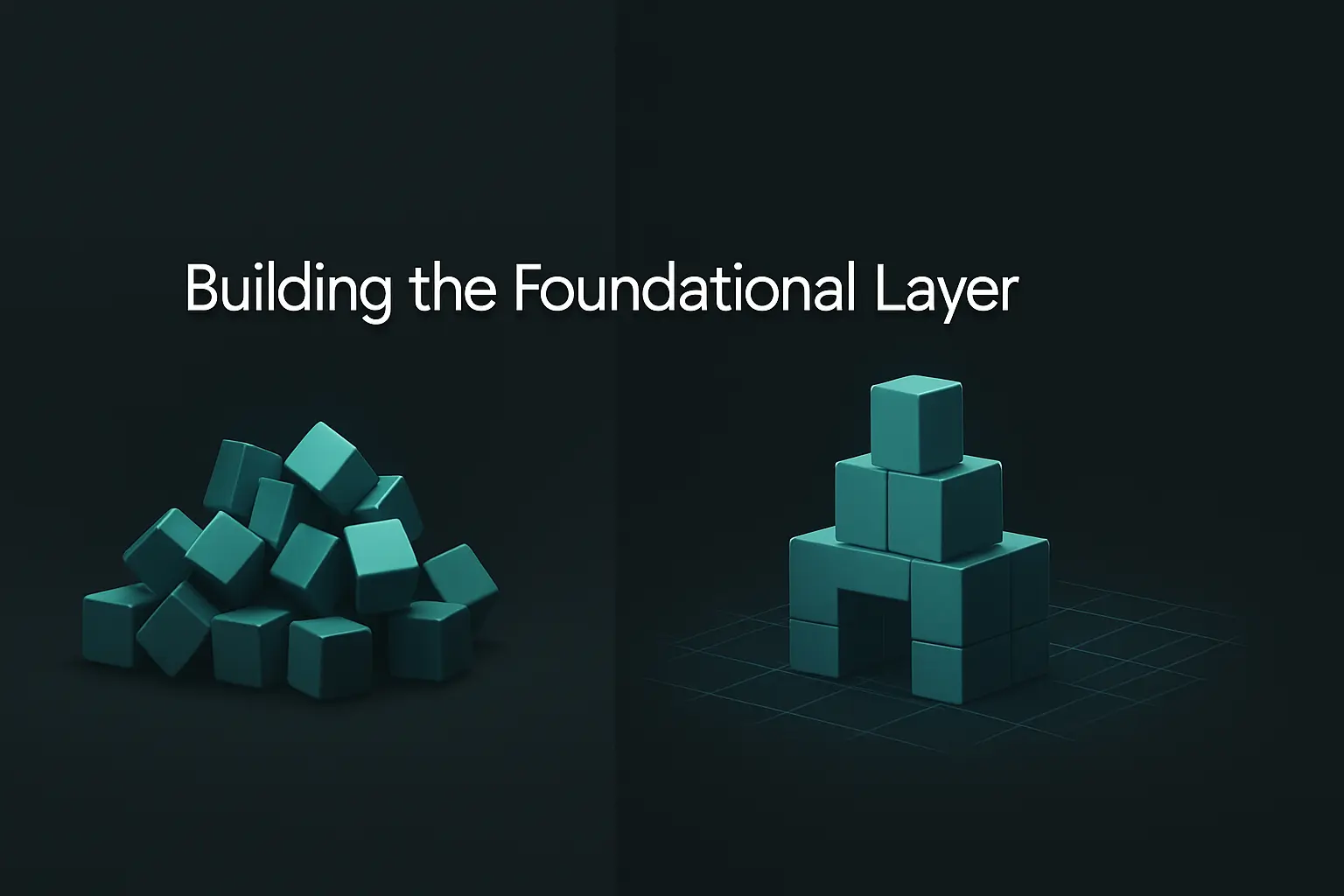
This initial „slow“ phase of design was the most important work we did. It established the rails upon which we could later run the content train at high speed. When we finally began publishing in earnest, every article had a predetermined place in the system. It fit perfectly into a category, followed a proven template, and linked naturally to its parent and child topics. There was no guesswork. The system dictated the execution.
The Insight: Build the System First, Then Feed It
Ultimately, a content operation’s scalability isn’t determined by publishing velocity, but by the integrity of its underlying structure. Rushing to publish content without a clear architectural foundation is a short-term tactic that creates long-term drag. A robust, well-designed system allows for both speed and quality over the long haul. The discipline to build the foundation first is what separates a fleeting collection of posts from an enduring library of knowledge. It’s a key lesson in all forms of [experiment documentation]—the setup determines the outcome.