It started with a quiet week. Too quiet. The hum of new, high-value inquiries at JvG Technology—typically a steady rhythm in our operations—had faded to a whisper. My first thought was market fluctuation, a typical ebb and flow. But the feeling that something was amiss persisted.
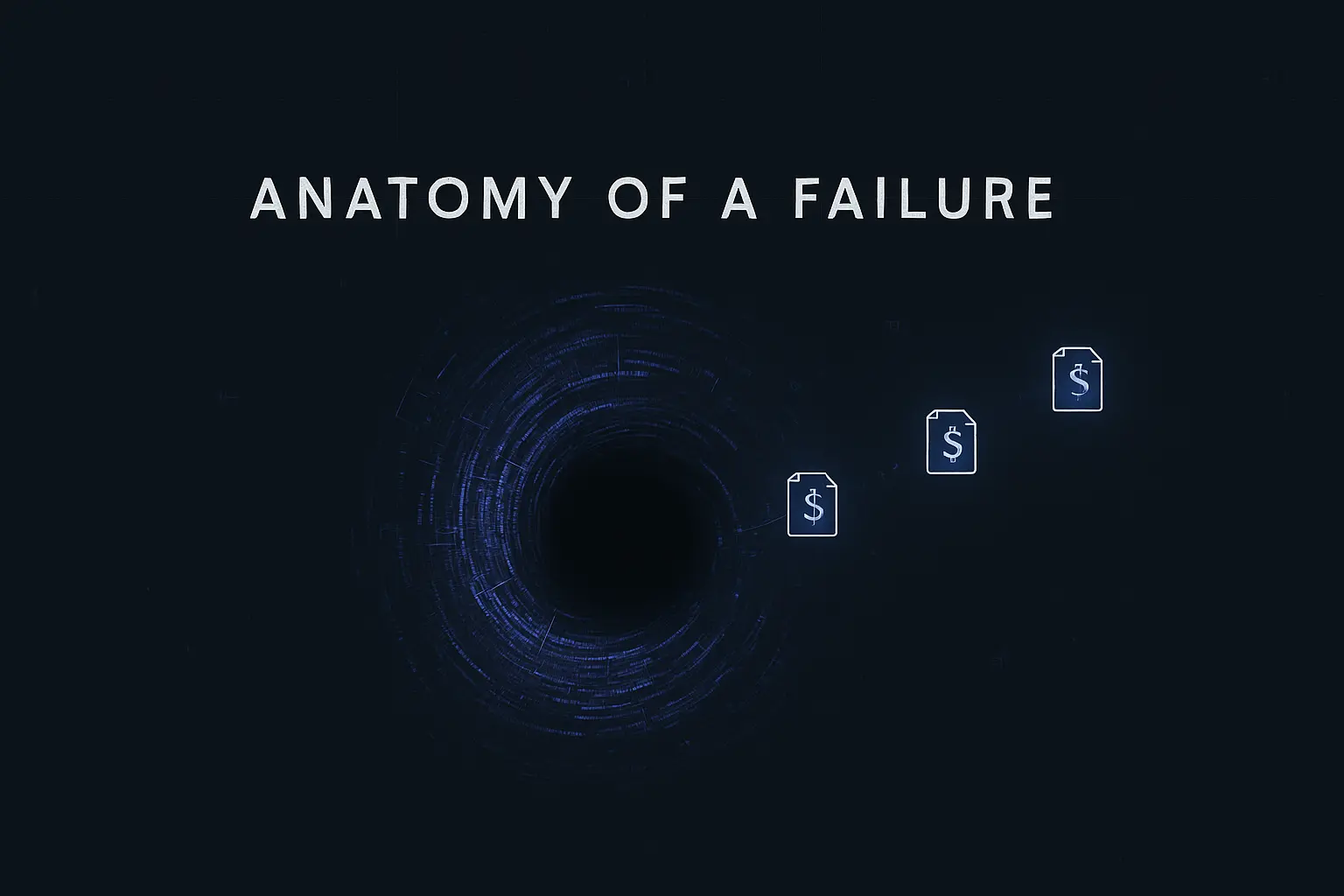
A quick check of our marketing dashboards showed that traffic was normal and form submissions were still coming through. Yet, the sales team’s pipeline was running on fumes. The leads were coming in, but they weren’t going anywhere. They were vanishing into a digital black hole we had accidentally engineered.
This is the story of how a single, flawed piece of logic in our automation system caused over 100 qualified, high-value inquiries to disappear—and the lessons we learned rebuilding it.
The High Stakes of a Single Inquiry
Before dissecting the failure, it helps to understand the context. At JvG Technology, we build solar module production lines. An inquiry isn’t a casual ‚tell me more‘; it’s often the start of a multi-million-dollar project discussion. The stakes are immense, and speed is everything.
Research from Dunn & Bradstreet shows that B2B leads not contacted within five minutes are 10x less likely to convert. Our entire lead management system was built around this principle: immediate, accurate routing to the right regional expert.
These are not impulse buyers. According to Gartner, over 70% of B2B buyers have already defined their needs before they engage with a sales representative. They’ve done their homework. Forrester data suggests the average B2B buyer conducts 12 online searches before landing on a specific brand’s site.
When a lead fills out our form, they are at the peak of their intent. They’ve navigated the internet, defined their needs, and chosen to contact us. Failing them at this critical moment is not just a missed opportunity; it’s a catastrophic breakdown of trust that wastes the entire customer journey that preceded it.
The Flaw: Elegant Logic is Brittle Logic
Our original lead-routing system was, I thought, elegantly simple. It was a series of ‚IF-THEN‘ statements based on the ‚Country‘ field in our inquiry form:
IF Country is Germany, THEN assign lead to Sales Team DE.
IF Country is USA, THEN assign lead to Sales Team US.
IF Country is India, THEN assign lead to Sales Team IN.
And so on for our key markets.
This logic worked perfectly for years. But it had a fatal flaw: a single point of failure we’d never accounted for. The system had no instructions for what to do when a country didn’t match our list. There was no ‚ELSE‘.
![A diagram illustrating the flawed ‚IF-THEN‘ lead routing logic, showing a single point of failure where if the condition is not met, the lead goes nowhere.]()
The breakdown happened when we ran a campaign targeting a new, emerging market—one that wasn’t on our predefined list. The inquiries came in, the automation triggered, and the logic asked, ‚Does the country match Germany, USA, or India?‘ The answer was no. And because we never told the system what to do next, it did nothing. The leads sat in a digital purgatory, unassigned and invisible.
This is a classic data flow problem, the kind IBM estimates costs U.S. businesses $3.1 trillion annually. Our perfectly good data became worthless because of a crack in the pipe designed to carry it.
Building a Resilient System: The Post-Mortem Fix
Discovering the problem felt like a punch to the gut. The financial and reputational costs were significant. But the most critical step after a failure is the post-mortem. We didn’t want to just patch the hole; we wanted to rebuild the entire system to be antifragile.
Our new approach is built on two core principles:
- No Lead Left Behind: Every lead must have a designated destination, even if it’s not the perfect one.
- Immediate Anomaly Alerts: The system must scream for help the moment it encounters something it doesn’t understand.
This led to a new routing logic with two critical additions: a Default Catch-All and an Alerting Mechanism.
Default Catch-All: This is the ‚ELSE‘ we were missing. Now, if a lead’s country doesn’t match any of our predefined rules, it is automatically routed to a general ‚Unsorted Inquiries‘ bucket. This bucket is monitored by a senior manager, whose job is to manually triage these leads within minutes. It isn’t perfectly automated, but it guarantees a human reviews the lead.
Alerting Mechanism: At the same time, the system sends an immediate, high-priority alert to our operations channel in Slack and via email. The alert says, ‚Warning: An unclassified lead from [Country] has been received and routed to the Default Catch-All. Please review the routing rules.‘
Here’s the blueprint for our new, more resilient system:
![A drawing showing the new, resilient lead routing system with a ‚Default Catch-All‘ and an ‚Alerting Mechanism‘.]()
The experience was a powerful lesson in system thinking. The goal isn’t to create a perfect, rigid system that never fails. It’s to create a resilient system that fails gracefully, alerts you instantly, and prevents catastrophic outcomes. This philosophy is now central to how we approach everything from our internal processes to our complex CRM integration. When designing robust automation workflows, planning for failure is just as important as planning for success.
Your System Resilience Audit Checklist
From this failure, we developed a simple checklist that we now apply to any new automation or workflow. I share it here in the hope that it helps you avoid your own ‚black hole‘ incident.
![A simple flowchart titled ‚System Resilience Audit Checklist‘ with points like ‚Identify Single Points of Failure,‘ ‚Implement Default States,‘ ‚Create Alerting Triggers,‘ and ‚Regularly Review Logic.‘]()
Frequently Asked Questions (FAQ)
What is a ’single point of failure‘ (SPOF)?
A single point of failure is any part of a system that, if it fails, stops the entire system from working. In our case, the rigid ‚IF-THEN‘ logic was an SPOF because it had no backup plan for unexpected inputs.
What is a ‚catch-all‘ or ‚default state‘?
A default state is the fallback option in a system’s logic. It’s the action the system takes when none of the primary conditions are met. Our ‚Default Catch-All‘ bucket is a perfect example—it ensures that even unclassifiable leads have a place to go instead of getting lost.
How often should you audit your automation rules?
We now conduct a quarterly review of all critical automation logic. However, an audit should also be triggered whenever a related system changes. For example, updating your CRM, adding new form fields, or launching campaigns in new regions should all trigger an immediate review of your routing rules.
What tools can help monitor these systems?
While many CRM and automation platforms have built-in logs, we found that creating our own external alerting mechanism was key. Using tools like Zapier or Make to connect our CRM to Slack, we built an independent notification layer. If the CRM fails to send an email, the Slack alert still comes through, giving us a crucial layer of redundancy.
Failure as a Data Point
A system failure is never welcome, but this one was a valuable, if expensive, lesson. It forced us to move from simply building workflows to designing resilient systems. The black hole was of our own making, born from an over-reliance on a clean, simple process and a failure to imagine the messiness of reality.
Today, our system is stronger not because it’s more complex, but because it’s more humble. It anticipates its own ignorance and has a plan for when it encounters something new. And that, I’ve learned, is the true mark of a system built to scale.