I’ve learned that complete trust in any automated system is a fast track to an expensive mistake. I remember one Monday morning at Mehrklicks when we discovered an algorithm had spent over €5,000 on a single, non-converting keyword over the weekend. The machine was technically ‚learning,‘ but its education was costing us a fortune.
This wasn’t a bug in the platform, but a flaw in our process. We had handed over the keys without installing a proper alarm system. The experience was a stark reminder that while algorithms can operate at a scale and speed humans can’t match, they lack one critical component: context.
That’s why we started building what we now call our ‚Red Flag‘ Dashboard—a custom monitoring system designed not to replace automation, but to prompt human intervention at exactly the right moment. It’s our essential safety net, ensuring a human strategist is always in the loop.
The Allure and the Anxiety of the Algorithm
The promise of automated ad spend is immense. Programmatic bidding and AI-driven campaign optimization let us manage complexity and scale in ways that were impossible a decade ago. We rely on these systems to make thousands of micro-decisions every minute.
Yet, this reliance creates a silent anxiety for anyone managing a significant budget. Are we optimizing for the right metric? Is the algorithm interpreting market signals correctly?
This anxiety isn’t just personal; it’s a recognized challenge across the industry. A 2023 report from McKinsey on the state of AI found that while adoption is soaring, ‚inaccuracy‘ remains one of the top risks cited by organizations. We’re all eager to leverage the power of AI, but we’re also acutely aware that these systems can and do get things wrong.
An algorithm might notice that a certain demographic is converting and double down on it, failing to recognize that these are low-value, high-refund customers. It might react to a sudden dip in traffic by aggressively increasing bids, not realizing the dip was caused by a site-wide server outage. It operates on correlation, not causation—a dangerous blind spot.
Designing a System for Intelligent Oversight
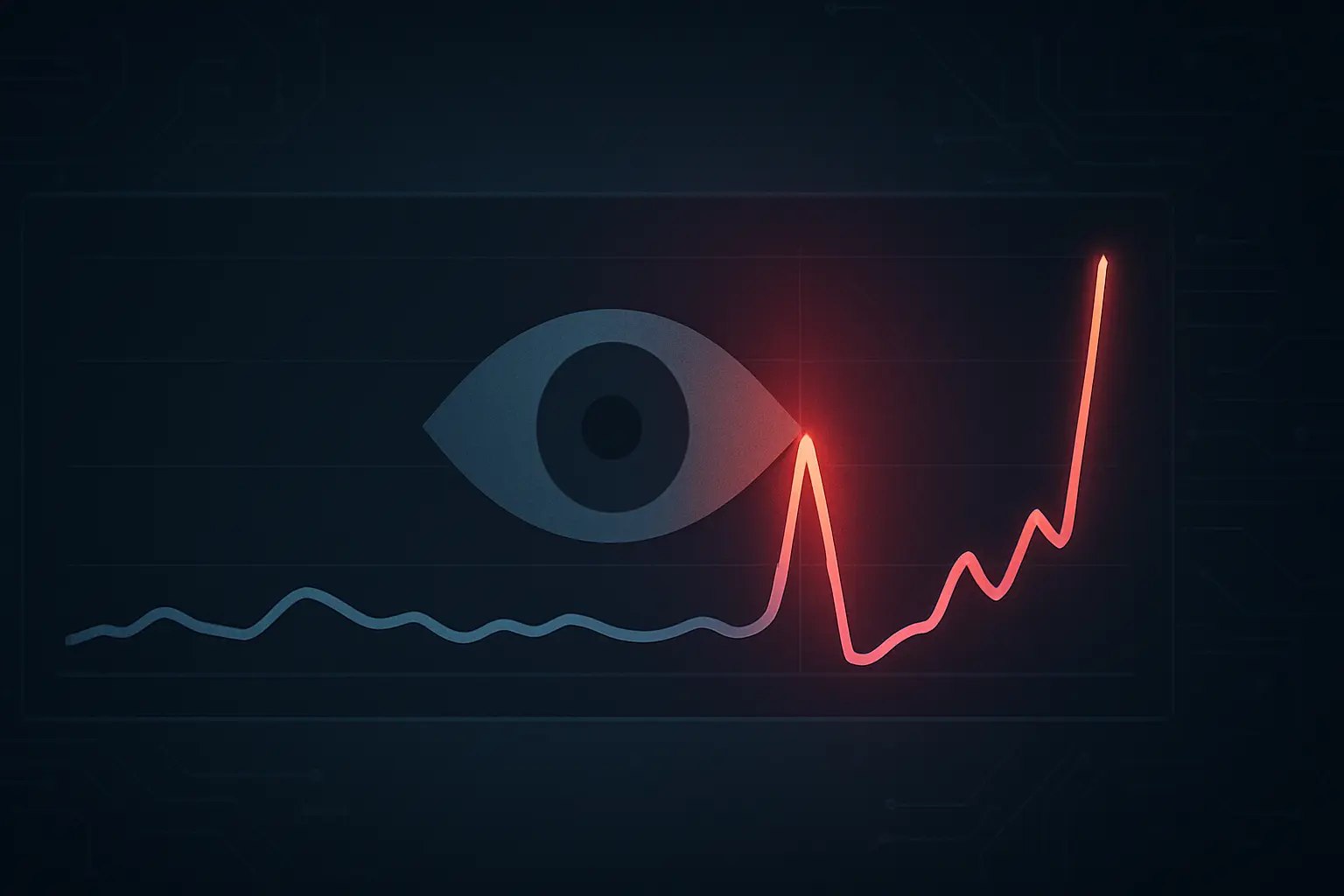
Our goal for the Red Flag Dashboard wasn’t to micromanage the algorithms; that would defeat the purpose of automation. Instead, we aimed to create an early-warning system that could detect statistical anomalies—signs that the machine might be operating on flawed assumptions.
The core principle is to establish a baseline for ’normal‘ performance for each campaign, which allows the system to alert us when key metrics deviate beyond an acceptable threshold. It’s a bridge between raw data and human judgment.
The system pulls data directly from the Google and Meta Ads APIs every hour. It doesn’t just look at simple metrics like Cost Per Click (CPC); it calculates rolling averages for strategic KPIs like Cost Per Acquisition (CPA) and Return On Ad Spend (ROAS) over 7-day and 30-day windows. If a campaign’s CPA for the last 24 hours is more than two standard deviations above its 30-day average, a red flag is raised, and a human is immediately notified to investigate.
How It Works in Practice: A Real-World Example
A few weeks ago, the dashboard flagged a high-performing campaign. Its CPA had nearly doubled overnight, though the total spend remained within its daily budget. The ad platform’s own algorithm saw no issue; conversions were still coming in, just at a much higher cost.
This is precisely where human oversight proves its value. The dashboard alert triggered a manual review. Our campaign manager quickly discovered that a competitor had launched an aggressive promotion, driving up auction costs across our core keywords.
The algorithm’s logical response was to simply pay more to maintain impression share. The human response, however, was strategic: we temporarily shifted budget to different, less competitive keywords and adjusted our ad copy to highlight our unique value proposition against the competitor’s discount.
This is a perfect example of what researchers at MIT Sloan call ‚Human-in-the-Loop‘ (HITL) machine learning, where human intelligence is integrated to help the model handle ambiguity and edge cases. Our dashboard is the mechanism that facilitates this loop, ensuring that our team’s expertise is applied where it has the most impact. This is a core component of effective data analysis for decision-making; the system presents the problem so that a human can provide the strategic solution.
Beyond Budgets: Why Human Oversight is a Strategic Imperative
This system is about more than just preventing budget waste; it’s about maintaining strategic alignment. Gartner identified ‚Adaptive AI Systems‘ as a major technology trend, highlighting systems that can modify their own behavior at runtime. This is powerful, but it also means an algorithm’s goals can drift away from the business’s actual goals without anyone noticing.
In a broader sense, this touches on the risks of unchecked automation that organizations like the World Economic Forum have warned about. When we build systems that operate autonomously, we also have a responsibility to build in checks and balances. Our dashboard is a micro-solution to this macro-challenge. It ensures our automated campaigns don’t just become efficient, but remain effective and aligned with our clients‘ objectives.
Ultimately, this oversight layer is a non-negotiable part of building scalable marketing systems. True scalability isn’t just about handling more volume; it’s about maintaining quality and control as you grow.
The Human-in-the-Loop Workflow
The process is designed to be efficient and interrupt-driven, meaning our team isn’t constantly checking dashboards. They’re brought in only when their expertise is required.
This workflow frees up our specialists from mundane monitoring to focus on higher-level strategy, creative testing, and exploring new opportunities—work that machines simply can’t do.
Frequently Asked Questions (FAQ)
What kind of anomalies does the dashboard look for?
The system primarily monitors for statistically significant deviations from a campaign’s historical performance. This includes sudden spikes or drops in Cost Per Acquisition (CPA), Click-Through Rate (CTR), Conversion Rate, and total spend. For example, it might flag a campaign if its CTR drops by 30% in 12 hours or if its CPA rises more than two standard deviations above its 30-day average.
Isn’t this just what the ad platforms‘ automated rules do?
Not quite. Automated rules within platforms like Google Ads are typically binary and based on fixed thresholds (e.g., ‚pause keyword if cost > €50‘). Our dashboard operates on statistical variance. It understands that a €50 CPA might be normal for one campaign but a catastrophic failure for another. It looks for abnormal behavior relative to the campaign’s own history, which is a more nuanced and effective way to spot genuine problems.
How much manual work does this create?
Counterintuitively, it has reduced our manual workload. The system is calibrated to flag only the top 1-2% of statistical events that truly warrant a strategic review. Instead of our team spending hours every day manually scanning dozens of accounts for potential issues, they now spend a few minutes investigating the handful of legitimate alerts the system generates. It’s similar to the efficiency gains we found when automating our client reporting—using systems to surface only what needs human attention.
Can a small business build something like this?
Absolutely. The core principle is more important than the specific technology. You can implement a basic version of this using a connected Google Sheet that pulls data via an add-on and uses conditional formatting to highlight anomalies. The next step could be a Google Looker Studio (formerly Data Studio) dashboard with built-in alerts. The key is to adopt the mindset of human-in-the-loop oversight, even if your initial tools are simple.
Next Steps: Evolving the System
This Red Flag Dashboard is a living project. Our next iteration will add a layer of machine learning to the anomaly detection itself, moving us from reactive alerts to predictive warnings. Could the system learn to identify patterns that precede a drop in performance? That’s the next experiment.
For now, it has fundamentally changed how we manage automated systems. We’ve moved from blind trust to informed supervision. It serves as a constant reminder that the most powerful systems aren’t those that replace humans, but those that successfully augment them. It invites us to ask: where in our own automated worlds have we forgotten to install the alarm?