How a 3-Word Search Query Uncovered Our #1 Marketing Insight
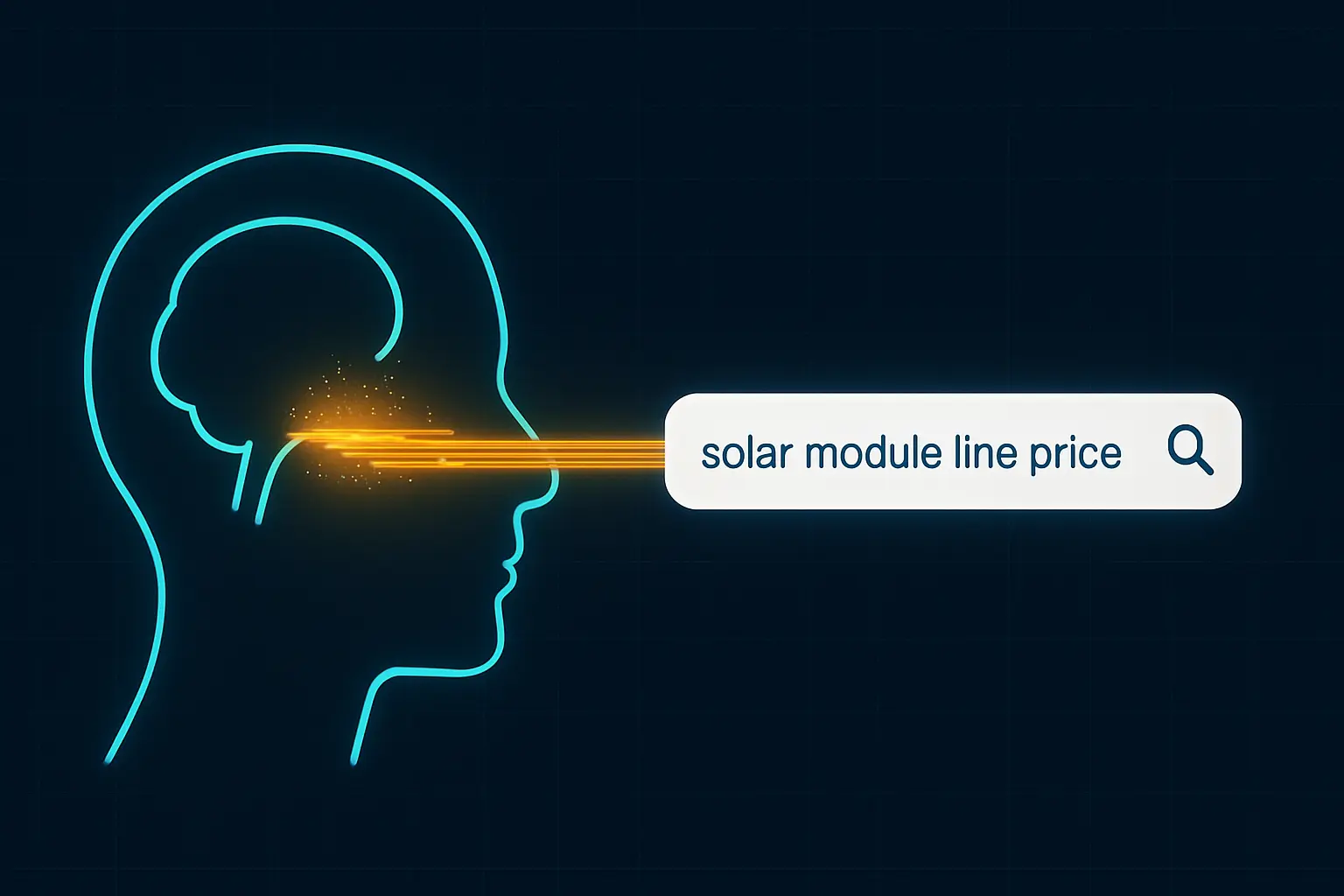
Our most valuable data point while exploring a new market for JvG Technology didn’t come from a lead form. It came from a simple, three-word search query: “solar module line price.”
Initially, my team and I structured our first Google Ads campaigns logically, or so we thought. We targeted technical terms—phrases like “solar production equipment,” “photovoltaic manufacturing solutions,” and “turnkey PV assembly line.” These were the terms we used in our engineering briefs, brochures, and client meetings, so we naturally assumed our potential customers—sophisticated factory planners and investors—would use the same language.
We were wrong. While those technical terms generated some impressions, engagement was low. The data felt flat, lifeless. It was the digital equivalent of speaking into an empty room.
Then, a few clicks trickled in from a keyword we had included almost as an afterthought. The search term report showed queries like “how much does a solar module line cost” and the simple “solar module line price.” The click-through rate on these ads was nearly four times higher than on our carefully selected technical terms.
This wasn’t just a fluke. It was the market talking back to us. It was the moment our paid advertising strategy shifted from a sales tool into a research engine.
Observation: The Gap Between Industry Jargon and Buyer Questions
The data revealed a fundamental disconnect. We, the sellers, were focused on communicating our solution’s complexity and features. The buyers, however, were starting their journey with the most fundamental business question: What is the investment?
Our internal analysis of the first month’s search term data showed a clear pattern:
- High-Volume, Low-Intent Queries: Terms like “solar production equipment” had broad reach but attracted a mix of students, competitors, and researchers. The intent was informational and unfocused.
- Low-Volume, High-Intent Queries: Terms with commercial modifiers like “price,” “cost,” “quote,” or “for sale” had significantly less search volume but were clicked almost exclusively by users who then visited key pages on our site and spent more time there.
This revealed a crucial lesson: the language of the buyer is often simpler and more direct than the language of the seller. While we were broadcasting specifications, the market was quietly asking about economics. This aligns with industry research showing that B2B buyers complete over 70% of their research online before contacting a sales representative. Our ads were intercepting them in the middle of that private research process.
Framework: Structuring Ad Groups as Data Collection Systems
This insight fundamentally changed how we viewed our campaign structure. Instead of organizing ad groups by product feature (e.g., “Laminators,” “Stringers”), we rebuilt them around user intent. Our Google Ads account was no longer just an advertising platform; it became a structured map of market curiosity.
Our new framework looked something like this:
- Investment & ROI Intent: This ad group targeted all keywords related to price, cost, and financing. The ad copy spoke directly to budget planning and investment returns. The goal here wasn’t to generate a lead but to understand how sensitive the market was to cost as a primary qualifier.
- Turnkey & Solution Intent: This cluster focused on terms like “turnkey solar line” or “complete module factory.” It captured users looking for an end-to-end provider, signaling a different level of operational readiness. This taught us that many prospective clients weren’t component shopping; they were system shopping.
- Technical & Specification Intent: Here, we housed our original engineering terms. This bucket was still important, but we now understood its role: to capture a smaller, more technically-minded segment further down the funnel. Data from this group helped us refine our technical documentation and datasheets.
- Geographic & Regional Intent: We added location modifiers (“in India,” “for USA market”) to understand where demand was most active. This became a powerful tool for prioritizing our business development efforts, revealing surprising hotspots of interest.
By treating each ad group as a separate sensor, we stopped chasing clicks and started collecting intelligence. The goal of our modest ad spend wasn’t immediate ROI in the form of leads, but rather clarity—we were paying for a real-time report on what the market actually cared about.
Insight: Your First Marketing Channel Should Be a Listening Tool
The biggest takeaway from this experiment was a simple but powerful principle: your first interaction with a market shouldn’t be a sales pitch, but an act of listening. Paid search, when used as a discovery layer, is one of the most effective listening tools available. It bypasses surveys and focus groups, giving you unfiltered access to the exact language customers use when they are trying to solve a problem.
This approach of building systems for learning has become central to how we approach new markets. Before we build a complex sales funnel or launch a major content initiative, we launch a small, structured ad campaign. We let the data tell us what questions need answering, what problems are most urgent, and what language resonates.
It’s a more patient, analytical approach, but it ensures that when we do speak to the market at scale, we’re not just talking to ourselves.
Frequently Asked Questions
Q1: Isn’t using Google Ads just for research an expensive way to get data?
It can be, but it doesn’t have to be. We set a modest, fixed budget, viewing it as an R&D expense rather than a marketing cost. The cost of a few hundred clicks is often far less than building an entire sales strategy on the wrong customer assumptions. The speed and quality of the feedback are hard to match.
Q2: How is this different from using a standard keyword research tool?
Keyword research tools provide historical estimates of search volume. A live paid discovery campaign provides real-world behavioral data. You see not only what people search for but also which messages they respond to (ad copy), what they do after they click (on-site behavior), and how intent differs across regions and devices. It’s the difference between reading a map and driving the roads.
Q3: How long do you need to run a campaign like this to get meaningful data?
For our highly niche B2B market, we started seeing clear patterns within 30-60 days. In a market with higher search volume, you could get the same clarity in a matter of weeks. The goal isn’t statistical significance on conversions but rather identifying recurring themes in search behavior and intent—a core tenet of how we run experiments in our business.